
Concordat Watch - Concordat Watch -
Concordat Strategy
“If you want to do something evil, put it inside something boring.” - John Oliver
For over 900 years concordats have been central to the Vatican's attempt to wrest power from the state. The pope made three bids to control England. First he failed to get William the Conqueror to swear fealty to him, then his legate got chased out for trying to assume rule over the country, but in 1107 the pope finally managed to get the Henry I to sign the world's first concordat. These agreements with the Vatican, give it political and financial privileges, and there are now about 200 current concordats. Pope John Paul II even made a point of stressing that international treaties must be kept.
- What are Concordats?
These church-state accords, known under various names, can give the Catholic Church massive state subsidies and other privileges. They can also let Church employees be hounded about their private lives. Yet as “international treaties”, once ratified, concordats cannot be changed by parliaments. Most have been concluded with the Vatican, but now many are being made with the Order of Malta which functions as the Pope's "wholly-owned subsidiary".
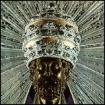
- The Vatican’s triple crown: church, government and state
“The Vatican is inserted into the international community because it is a state; once there, it behaves like a church.”[1] By setting up three legal identities and then adroitly switching from one to another, the Vatican has obtained unprecedented legal rights and international influence. This brilliant video sums it up: “Vatican City explained”.
- Order of Malta ― the Vatican’s second treaty-making “sovereign entity” (2017)
The Sovereign Military Order of Malta has concordats with more than 100 countries worldwide and enjoys observer status at the United Nations. Called “cooperation agreements”, these treaties let it deliver state-funded social services in accordance with Catholic doctrine. This religious order is “sovereign” when it deals with nation states, but not when it deals with the Vatican. It is firmly controlled by the pope.
♦ Who knows? The Knights of Malta know: an excerpt from the National Catholic Reporter (1989) describing their behind-the-scenes activity.
♦ Concordat with the Order of Malta (2010): text: also the cloak-and-dagger origins of the concordat which controls most of the social services in Hungary.

- Worldwide extension of concordats (1107-2018)
Concordats are no longer agreements between the pope and a Catholic king, as they were when they began. Now they are being extended to countries without a Catholic majority, or even a Christian majority. By the beginning of 2017 the Vatican had at least one concordat or more with over 50 countries.

- Vatican religious alliances to end family planning worldwide: 1994-2016
The Vatican alliance with the US Evangelicals to outlaw contraception has limited access worldwide. It has made the US public reluctant to contribute to health clinics in developing countries and to the UN Population Fund. This alliance was then extended to include the large Russian Orthodox Church and the Chief Rabbinate of Israel. Now the Vatican — doubtless with its eye on China — is making overtures to the Buddhists.

- Saint Gianna, patron of motherhood-at-all-costs
"When the Vatican has a principle, no sacrifice is too great."
Forced reproduction must be sugar-coated. Women are the collateral damage of the Vatican's ban on effective contraception and they must be talked around. The Vatican is using both a new theology, the "culture of life", and the specially manufactured Saint Gianna to try to convince women that it's noble to die while producing children for the Church.

- Quotes on concordats
A dozen quotes from popes, prelates, lawyers and historians give different views on Vatican concordats.
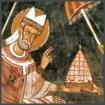
- Pope’s claim to temporal power based on 8th-c forgery
The document used to justify the pope owning his own kingdom turns out to be a fake. But it was very useful. This forged “Donation of Constantine” even let the pope claim to be the overlord of emperors and kings, the supreme ruler in former Western Roman Empire. Naturally, the book that finally exposed the document as fraudulent was banned by the Vatican.
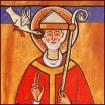
- Concordat agenda, 1075: the “Papal dictation”
This internal Vatican memo dictated by Gregory VII sets his agenda for increasing papal power, and underlies his demand that William the Conqueror pay him fealty. The English king's refusal helped shift the power struggle from outright Vatican sovereignty of Christian nations to Vatican control over their bishops, (the “investiture controversy”), and led to the earliest concordats.
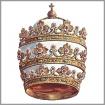
- The left gets a modus vivendi, the right a concordat
The Vatican makes concordats with rightwing governments, both absolute monarchies and fascist dictatorships. However, officially it snubs equally authoritarian governments on the left, since their regimes competed with the Church ideologically, rather than complementing it. But in order to slavage as much influence as possible, the Vatican made quiet working arrangements with communist countries.
- Canon Law
Catholic canon (or Church) law can be altered by the pope, who is the only absolute monarch left in Europe, any time he pleases. Polls show that most Catholics do not agree with many of these Church rules, but they have no say. Canon Law conflicts with some human rights and laws based on them, such as mandatory reporting of child abuse. It is built around the concept of "avoiding scandal" (i.e., saving face for the Church), and "scandal", sometimes referred to as "gossip", is a crime (delict) in Canon Law. Pope Francis has even claimed that a global pandemic is preferable to open criticism of his Church: “Gossip is a plague worse than Covid.”

- Just one side bound by concordats?
A century ago the Vatican denied that concordats were treaties with reciprocal obligations. It claimed that while the Pope's concordat partners were bound by concordats, he was not. It was said to be theologically impossible for the Church, the highest society of all, to be placed under an obligation by a lower one, such as a state. Has this conviction really changed, or is this no longer proclaimed due to improved marketing?


