
Concordat Watch - Concordat Watch -
Concordat diplomacy: Tricks of the trade
How does the Vatican get a country to enter into a concordat? A pincer movement can combine diplomatic pressure from the Vatican “state” outside the country with religious pressure from the Church inside the country. Papal trips play a role here and share the ambiguity: they are called both “state visits” and “pilgrimages”.
Vatican diplomacy, described in the Wikileaks as "always active and influential behind the scenes", is conducted by three principal means:
♦ an independent micro-state: The Vatican’s triple crown: church, government and state
♦ a diplomatic corps: Vatican diplomacy at home and abroad
♦ and reciprocal "state visits": The secret costs of papal visits.

- Twenty tricks to get a concordat through
Here are 20 tricks to help get a concordat signed and ratified, with examples to show how these dodges work. This is your guide if you hope to become the Vatican's foreign minister (“Secretary for Relations with States”). Above all, don’t forget the “mousetrap clause”. This frees the concordat from democratic control forever and lets you move on to the next one. Fortuna!
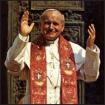
- Papal trips: both “pastoral visits” and “state visits”
On his travels John Paul II took the advantages of being a visiting head of state and a religious leader, just as the Holy See exploits its dual status as country and church. He used his "state visits" paid for by his hosts, for "pastoral visits" where he evanglised at his World Youth Days, issued "moral guidance" on proposed laws and reined in "liberation theologians". Included is a list of the 104 trips of John Paul II. Another pope, Francis I, also has enough personal charisma to distract people from his conservative doctrines.

- The secret costs of papal visits (1990-2013)
Governments try to keep the costs of papal visits hidden from the taxpayers, especially security, the largest item by far. In Australia the total expenses were even declared a state secret. See also:
♦ The Vatican’s triple crown: church, government and state
♦ Papal pomp thanks to British taxpayers (2010)
♦ Spanish Catholics protest new way to hide papal visit costs (2010)
♦ Security hysteria on the Pope’s trip to Bavaria (2006)
♦ Vatican's “World Youth Day 2005” funded by European Union
♦ Gay Catholic youth not wanted at Australian WYD (2008)
- The hallelujah weekend of Ireland throws a long shadow (1979-2018)
The papal visit of 1979 boosted Irish fertility after John Paul II exhorted the women of Ireland to be fruitful like the Virgin Mother. His real aim was to head off tentative moves by the Irish government to legalise contraception. This was eventually done, bit by bit, but the ban on abortion remained largely unchanged. It took a series of tragedies — and 39 years — for the Irish to decide to change a constitution that had enshrined the anti-abortion doctrine of the Catholic Church.
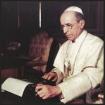
- Vatican diplomacy at home and abroad
Vatican diplomats have the dual role of representing the Holy See to the nation where they are posted and of keeping an eye on the local Catholic Church. Vatican City is a hub for diplomats with accreditation limited, when possible, to conservative Catholics who may have a double allegiance: to their own country and to the Church. At the start of 2017 the Vatican had diplomatic relations with 182 states.

- Concordats as international treaties
Concordats take the form of treaties between the Church government and a national government. This allows them, in most cases, to claim precedence over national legislation, and sometimes even over a country's constitution.

- How do concordats mesh with a country's laws? Legal experts explain
In (monist) countries where international treaties are at the top of a single hierarchy of laws, concordats have automatic precedence even over constitutions. In dualist countries, on the other hand, concordats must be incorporated into national law and their priority varies, though, even here concordats generally outweigh national laws.
- How Pope John forged relations with the Communists by sending birthday greetings to himself (1961)
The West’s acceptance of the Berlin Wall indicated that Communism was going to remain unchallenged and was there to stay. This obliged the Church to find a way to begin negotiating with its sworn enemies ― without this looking like cynical political manoeuvring. The solution was ingenious.
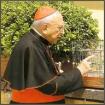
- Vatican Foreign Ministers: Agostino Casaroli (1967-1990)
This legendary cardinal-diplomat served under five Popes. Appointed roving ambassador in Eastern Europe in 1961, he took part in the 1975 Helsinki Conference, urging that religious freedom be monitored in Communist countries. The Soviets retaliated by putting a “bug” inside his statue of the Virgin.
- Vatican Foreign Ministers: Tauran (1990-2003) justifies Vatican diplomacy
Remarkably, Cardinal Tauran tries to justify the international status accorded to the Holy See by citing the Church's own Canon Law. He also outlines the different kinds of Church-state agreements, the aim of a concordat ("the salvation of the soul"), why concordats are desirable (they get around democratic control) and a checklist for the contents.
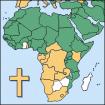
- Vatican Foreign Ministers: Lajolo (2004-2006) on concordat diplomacy
Archbishop Lajolo, former foreign minister of the Holy See, gives an update on papal diplomacy in the course of the two talks outlined here. He claims that concordats protect “religious freedom” and attempts to justify signing them with brutal regimes.
- Excerpt from the “Vatican in World Politics”
This excerpt gives some of Avro Manhattan's astute observations on Vatican diplomacy, not his sometimes unsupported theories. “The Papal representative has at his disposal, not only the diplomatic machinery that any ordinary diplomatic representative of a lay State would have, but also the vast religious machinery of the Catholic Church inside the country to which he is accredited, as well as outside it.”
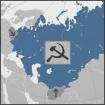
- Cold-war religious fronts against the Soviets in Poland and Afghanistan?
The first phase of the war in Afghanistan, which forced the USSR to retreat, is claimed to have begun as part of “a secret initiative” by the US and the Vatican to use religion to weaken the Soviet Union. It is depicted as a pincer movement of Catholic dissidents rousing Poland in the west, and Islamic insurgents expelling the Red Army in the south. Today the Vatican is happy to take credit for the first, but doesn’t mention the second.


